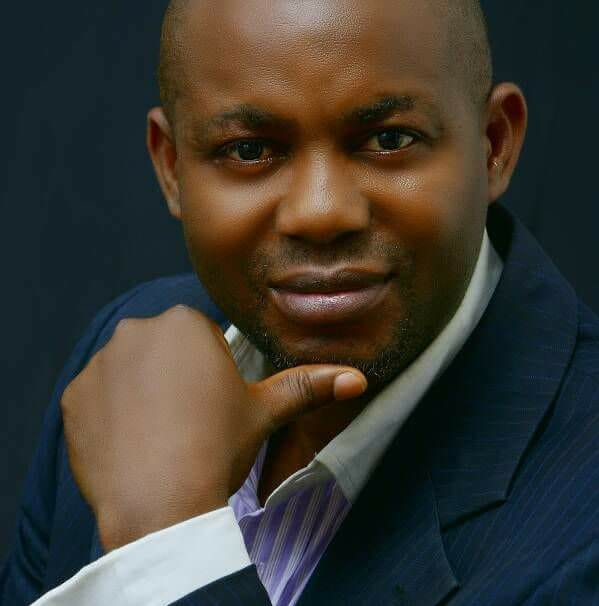
The hope of the candidate of Labour Party for the 2025 governorship election Chief George Moghalu to win the election heightened just the Presidential candidate of Labour Party in 2023 general elections in Mr Peter Obi along with Senator Victor Umeh, Senator Tony Nwoye and other members of the National Assembly as well as State House of Assembly members kicked off campaign urging the electorate to vote in the Labour Party candidate for the Anambra top.
Obi a former governor of Anambra along with Umeh, Nwoye and others who were present during the ceremony to flag of the campaign for Moghalu’s victory held in Commercial City of Onitsha assured that the Labour Party is ready to rekindle the quality leadership of ex Governor Obi if elected in the November 8 governorship election.
Addressing the audience Obi said that the Labour Party is part of the on going coalition movement for the future of Nigeria adding that his loyalists and followers in the LP and Obedient Movements are currently in African Democratic Congress, ADC for the coalition against 2027 Presidential election but still in LP for Anambra governorship election.
.Obi who spoke on Friday at the All Saints Anglican Church Cathedral, Onitsha, Anambra during the governorship campaign flag off of Dr. George Moghalu, the LP flag bearer and his running mate, Prof. Ifeoma Okaro, maintained that it is high time bad governance is stamped out of Nigeria, starting from Anambra state in 2025 down to Nigeria at large in 2027.
“I am calling on Ndi Anambra to vote for Moghalu as a good man and Labour Party as a vehicle for driving towards our ambition because we are part of the coalition for future and we are in ADC for the coalition for Presidential election but in Labor Party for Anambra governorship election”, Obi further clarified.
In his speech, Senator Victor Umeh representing Anambra Central Constituency described Obi as the sole of progress in Nigeria, while Moghalu who is a man of integrity was carefully chosen by the LP as it’s candidate to replicate Obi’s magic wand in Anambra state.
In his brief remarks, Moghalu promised to work with fear of God and according to the dictates of the party manifestos
According to Moghalu, “We will not use Aka Odo (Pestle) to drive tax. We will not use security operatives to extort or kill opposition. We will not use any crude manner to rule the state and above all, we will institutionalize Agriculture, skill acquisition, manpower development and revolutionize education”.
In an interview with newsmen, Hon. Uchenna Okonkwo representing Idemili North/South constituency in the House of Representatives, appealed to Ndi Anambra to elect Moghalu as the next governor and go to sleep with their two eyes closed.
The venue was the Presidential Villa (Residence and Office) and the subject was to explore options in the face of annulment of the election that was in the offing; the main actors were General Babangida, General Dogonyaro and myself.
This was not the first time General Babangida and I met like this. We met in Minna in early August 1985 to review how he was to proceed with a transition programme should the coup contemplated in August succeed; we met in Lagos in August/September 1985 after he had succeeded and had become the President over the steps he should take to evolve a transition programme; we met in Lagos over the Political Bureau Report and worked out what to do with the Report; we met in Lagos over the steps he should take to get a transition programme put together from the Report of the Political Bureau and the Report from the White Paper Committee.
General Babangida and I met at other times over the following issues: the evolution of the two-party system and the creation of the Centre for Democratic Studies; the setting up of the Constitution Review Committee; the composition of and charge to the Constituent Assembly; the production of the White paper on the Report of the Constituent Assembly; the drafting of the arguments for the Creation of States; the Banning or Disqualification of Persons; the Inauguration of the National Assembly; the Setting up of the National Defense and Security Council and the Transitional Council among other major policy issues in 1993 concerning the Presidential Election. In all these issues, our meetings and the papers produced formed the basis of the policies of his government.
It was not therefore unusual for the President to invite me to think with him in how to get out of the dilemma in which he found himself after the suspension of the election process and the injunctions on the NEC by various courts in the Southwest and Abuja and the decision of NEC to appeal to the Federal Court of Appeal.
I also thought that he wanted to discuss the diplomatic impasse he might have created by not seeing the British High Commissioner to accept the letter from Mr. John Major, the British Prime Minister. I could not think of the US reacting to the impasse because the US seemed to have faded away after the incident of June 11. My mind also went to the possibility nevertheless of a fresh, threatening message from the US. I could not rule out the US.
My mind went to the memorandum of June 20 (See Chapter Four) in which I raised many issues bordering on the President’s inability to assume moral leadership in the face of the apparent derailment of the transition programme and the sliding of the country into chaos. This turned out to be the subject of the meeting.
It was clear when I entered his office that he had lost command/control of the situation. He, in fact, confessed this to me, the first time he was making such a confession since I knew him. He pleaded that he needed help to find a solution to a complex problem which he did not quite understand. It was also clear to me but, unfortunately, not to my fellow Nigerians that the country was without a President that had authority either over the military (nor) over the civilians. One wondered, what would have happened if the political class had been united and pressed for the conclusion of the transition programme. But the political class was part of the problem. It was also not clear to the international community that Nigeria had no effective government at this time.
Why did the international community not issue statements supporting the June 12 elections even though they had the results? General Babangida knew he could purchase the political class, but he knew that the international community was not purchasable.
The President had no moral courage to call his “boys” to order having lied to them about Chief Abiola at the onset. These ‘boys’ had now by-passed him and formally linked up with the anti-democratic elements in the North working in concert with some Igbo leaders who felt that the time had come for them to avenge what they thought the Yoruba had done to them during the civil war. General Babangida was now a victim of this web of intrigue and he thought he needed help to take control of the situation, not to reverse it since he could not.
Once inside his office, he locked the door. He welcomed me with a strong appeal to my loyalty which I assured him was constant. I assured him that my loyalty to him as a friend should never be in a doubt. He looked very worried; he removed his shoes and cap and confessed that his wife did not know where he was at that time and he drove himself from Minna that morning just to talk to me; thus he expected me to be frank with him as I had always been. He went on: I have not seen my wife or briefed her of what I had been going through in the past three days. “I urged him to unburden his heart to me and assured him that I would be as frank as possible but that he would have to be open with me. For a few minutes he remained speechless and looked morose. The situation in which I saw him could only be compared with the situation in which I found him in 1985 when he was agonizing over what to do during the days preceding his decision to overthrow General Muhammadu Buhari’s military regime.
Just as he did on that occasion, he pleaded with me to advise him on how to free himself from the dilemma in which he found himself. On both occasions he used the same choice of words: “I see disaster for myself and my family. Where do I go now? He asked, “Professor, we must find a solution here and now or else I am finished”. He concluded. The operative clause is “we must find a solution’, meaning that he wanted me to work with him or he was relying on me for a solution. I did this with him in the past and he expected me to do it again with him in June 1993.
General Babangida proceeded to recount all that we did together in the past and pleaded that I should see him through this stage. I urged him again to unburden his heart and speak as freely as he always did so that we could discuss the issue. I assured him that there was no political problem that had no solution. He cut in to say that the issue facing him was not political, but had to do with his life, his family’s life, and even the life of his close friends, including me. Still, he was hesitant in addressing the question. Suddenly he got up and reached for the door, making sure that it was well secured; he unhooked his telephones and some security equipment, except the security line which linked him to his Service Chiefs. I was not surprised with this kind of behavior. I had gone through this with him before. It was clear to me that he was in trouble more serious than I had imagined. I was also deeply concerned for my own safety. This was a new angle which he had brought in. I narrowly missed the Orkar coup in 1990. I asked myself “Was a blood thirsty coup maker around”? But the coups that occurred in the past did not happen in broad daylight. He again kept quiet for some time and I pleaded with him the third time to speak his mind to me. He then gave me a pad from his table to take notes. Of course, I thanked him and pointed out that I had a pad and my memory to cope with the issues that would arise from the meeting. General Babangida opened with the following words which I jotted down as closely as possible, word for word.
1. They will kill me, they will kill the President-Elect, Chief MKO Abiola if I went ahead with the election and announced the winner of the elections which we all know to be Bashorun, Chief MKO Abiola. I know so; I am not daft. He won; he tried. I feel bad about the whole matter.
2. Professor, I do not see how they will spare you because they know that you are my principal confidant. You think they do not know you? They know; they know you are with me now. They saw you coming in and they know you are with me now.
He then paused and asked for my views. I started by saying that I sympathized with him. I assured him that I would be the last person to see him or his family dead in the hand of these unknown “they”. I then asked, “Who are these ‘they’ and what are your crimes? Is a coup imminent? Before he could reply I spoke again. “if a coup is imminent and you cannot stop it, then don’t resist, I counselled. “Call them and hand over and spare your life, if that is what they want”! I pleaded. “Is that what they want?” I asked.
It was at this stage that he confessed that he had misled his “boys”. He had assured them that he would be able to stop Chief MKO Abiola before the process reached the stage of election. He had also assured Chief Abiola that the road was clear for him to seek the Presidential election. He was now in severe difficulty as to what to do. He was sitting on the sharp point of a dilemma: it was either his life or his honour as an officer and a gentleman. He was inclined to settle for the former (his life) and to let go of the latter (his honour). I cut in to say that it would involve the whole country and that we might not be that lucky; the same life that we were trying to save could still be threatened and lost. He agreed with me, looking most concerned. Then he said, “This whole problem was caused by my men” and blamed those who pressured him to lift the ban placed on certain persons in December 1991 (see Chapter Three) which opened the way for Chief Abiola and Alhaji Tofa to enter the Presidential race. He also blamed his intelligence officers who told him that Chief Abiola would not get the nomination and that Alhaji Baba Gana Kingibe would defeat him at the Jos Convention. According to him, “They then turned round to tell me the story of how Chief Abiola bought the nomination with millions of Naira”. He thought these were the sources of the problem he faced.
At this stage, I had to cut in to remind the President that the report I brought from that Jos Convention did not say that money was not spent by Chief Abiola. In fact, that report said that money was spent by most of the SDP Governors, as well as Chief Arthur Nzeribe, Dr Olusola Saraki, Chief Emeka Ojukwu and others to promote the candidacy of Alhaji Baba Gana Kingibe and work against Chief Abiola. My report also confirmed that chief Abiola spent money to avoid being humiliated by the combined forces of SDP Governors and the disqualified Presidential aspirants of 1992. In that report, I said that for one man, in the person of Chief MKO Abiola, to withstand these money men and State Governments should be the sufficient reason why I thought the process should be allowed to go forward.
I also reminded the President that that was one of the subjects the Sultan raised with me in Sokoto in May 1993 when he counselled that the process should be abandoned. I asked him to recall that we both agreed on my return from Sokoto that it was too late in the day to do that.
The President then recalled how he blamed his security officers who did not give him both sides of the issue and how he concluded that MKO was his friend and that Tofa was his brother. The president was concerned that the Sultan and the Northern leaders were also opposed to Alhaji Tofa. I reminded him further that we parted that day with the understanding that whoever won the election would be okay by him. I drew his attention to how we came to the “last testament” and wanted to know what happened after May 17, 1993.
But he brought me right back to the immediate problem facing him. He agreed with my account, but said that he did not take his “boys” into confidence and that he had rejected the security briefs in the face of the report which I gave to him. He said that what he told them was that he would be able to stop Chief Abiola at the appropriate time. I then asked: “Do you think you have reached that stage now”?
He said: “Yes and No.
“It cannot be “Yes and “No”, I uttered and continued: “With the greatest respect and with the greatest sense of responsibility and with the greatest sense of loyalty to the President and love for the country, it is late in the day”.
He was shocked by my statement. Without giving a chance for response, I went personal’ and said, “This is not the appropriate time; we have passed that stage, Ibrahim. I can see your problem but the country will not take it”.
While he stared at me I went on: “You cannot tell the country this”. His countenance changed and he said, “The country will just have to take it,” he said “I cannot kill myself for the sake of what the country wants. I am sorry. He lamented. It was astonishing to hear a General State that he could not lay down his life for his country. But I understood what he meant.
It was clear that General Babangida was in a fix as of June 21, 1993 and was in a desperate search of how to escape the wrath of his boys. He had lost the battle over the crucial weekend between June 19th and 21st at Minna
MILITARY FACTOR
I then proceeded to deal with the questions of who were these “they” and for what reasons would they want to kill the President and the President Elect if the June 12 election were allowed to go forward. He named them in military and in ethnic categories:
Sani (meaning General Sani Abacha) is opposed to return to civilian rule. Sani cannot stand the idea of Chief Abiola, a Yonuba becoming his commander in chief at all. Sani seems to have the ears of the Northern leaders that no Southerner especially from the Southwest should become the President of this country. Sani seems to rally the Northern Elders to confront me on the matter. He is winning the Sultan and the Northern leaders are of this frame of mind. Where do I go from here? They do not trust me. Without Sani, I will not be alive today, without the North, I would not have become an officer in the Nigerian Army and now the President of Nigeria.
I then asked what he would want done in the circumstance and he said
I don’t want to appear ungrateful to Sani; he may not be bright upstairs but he knows how to overthrow governments and overpower coup plotters. He saw to my coming to office in 1985 and to my protection in the many coups I faced in the past, especially the Orkar coup of 1990 where he saved me and my family including my infant daughter”.
He went on,
Sani, you know, risked his life to get me into office in 1983 and 1985; if he says that he does not want Chief Abiola, I will not force Chief Abiola on him. I just have to end the whole matter and go back to the place of my birth. That is the way I feel now.
He also named Lt. General Dogonyaro and Brigadier General David Mark who were too close to him and would want the issue resolved within the shortest possible time. In fact, he quoted David Mark as saying:
I’d shoot Chief Abiola the day NEC pronounces him the elected President.
I asked the President what he would want me to do in the face of the threat to his life and the life of the incoming President. He again volunteered another issue from out of the blue which I shall discuss later. The President was in fact at that stage thinking of the military successor when he said:
I wish I can just call the “boys” and hand over to David Mark and pack my luggage and go to Minna.
I thought this was strange; but that was how his mind was working as of that date and time (1:00 pm on June 21, 1993.) He definitely said he would have to retire with the Generals, including Sani Abacha and Joshua Dogonyaro before handing over to David Mark. He was very categorical in this matter. He did not foresee a situation in which Abacha and Dogonyaro could be in one government. These two officers individually saw themselves as the maker of President Babangida and also considered themselves as heir apparent. The order of succession to General Babangida was an issue which would occur later.
I reminded him of one stark fact which he did not quite appreciate. I told him that the report from the Nigerian Election Monitoring Group (NEMG) showed that Chief MKO Abiola secured majority votes in all the polling booths located around the army barracks in the country, which meant that it was only the senior officers who, for their selfish reasons, were opposed to democratic change. He did not respond to this. I also reminded him of the study which the CDS did which demonstrated that the need to intervene was too high among his junior officers, especially those from the North. He also did not respond.
He then volunteered the information that the boys had given him an ultimatum at Minna to chose between vacating office that week on his own or else put a seal of conclusion on the annulment of the whole June 12 election that week. As a matter of fact, he said that they wanted to annul the election themselves over the weekend (on June 12, 1993) with a single announcement while he was with them at Minna but that he pleaded with them to give him a few days to work out the modality for doing it so as to give the impression that he was still in command of the situation.
I thought that he was taking the Nigerian people for a ride. But for how long! I then cut in, “It means you have already made up your mind to abort the democratization project?” He did not respond. This meant that he had already agreed to the annulment with his boys at the Minna meeting. I decided to probe further. I asked: “Is that all the “they? Are there still more? To which he said, “Yes”,
GEO-ETHNIC FACTOR
The next set of people unhappy about June 12 was represented by the Sultan of Sokoto who warned him not to undo the many years of Sardauna’s achievement for the North. The Sultan told him that the election of Chief MKO Abiola, whom he liked as a person and as a fellow Muslim, would enable the Yoruba to reverse the gains which the North had recorded since 1960. He reminded me that the Sultan had sent a message through me to him in May, saying that he should not allow the election to go forward. Suddenly, he exploded: “The Sultan was right after all; I should have stopped it then and the country would have settled down by now”. He told me that the Yoruba in the Presidency were openly parading themselves in the Villa saying that “Rankadede” (ie Northern or Hausa-Fulani hegemony_ would soon give way to “Kabiyesi” (Southern or Yoruba hegemony) and he exploded again, banging the table, “Not here, Professor, not here”. He offered an apology. “I am sorry to speak this way”. Then he continued, “These people just think that without them Nigeria cannot move forward. The Ibos should teach them the lesson of history” said the President, shocking me to the marrow of my bones.
It was clear that the “mistake of 1914” had taken a new turn for General Babangida to speak in that way.
What bothered me was that during the period Yoruba in Abuja had withdrawn to Lagos holding parties, thereby allowing the “annullists” to take over Abuja and consolidate. General Babangida even distanced himself from his Chief Press Secretary, Chief Duro Onabule, who was the former Editor of Chief Abiola’s newspaper, National Concord.
Even the Vice President, Admiral Augustus Aikhomu from Edo State in the South, was also isolated, He did not know what was going on. During this period, he confided in some people that he knew next to nothing about the President’s thinking.
I tried to advise the President not to believe in rumours but he fired back, “Don’t you know that Chief Abiola has already compiled a list of officers he would retire? Don’t you know that he has Yorubas he wants to put in their place? Don’t you know he wants to move Abuja?” The President went on, “Don’t you know all these things about Abiola rice, Abiola milk…
Extract from:The TALE of JUNE 12 – The Betrayal of the Democratic Rights of Nigerians (1993)
Author: Prof. Omo Omoruyi
Most of the chronic diseases troubling Nigerians today didn’t come from our soil.
They came from the things we stopped eating.
From the foods we abandoned in our pursuit of status. In pursuit of civilization and modernity! We are all pursuing for white collar jobs because civilization has destroyed our simple and serene way of living .
We had everything.
Bitterleaf and ogbono.
Acha, ofada, tigernuts, baobab, African oil bean, locust beans,ugwa,akpu, maize,yam,cocoyam etc.
We fermented, roasted, sun-dried, and slow-cooked meals that healed the gut and kept the liver sharp.
But somehow, someone convinced us that the very foods that kept our ancestors alive were dirty, local, primitive, and “not balanced.”
And that’s where the problem began.
Walk into most homes in Lagos or Abuja today and ask a child, “What did you eat for breakfast?”
The common answers? Bread and tea. Cornflakes and milk. Chocolate-spread sandwich.
Pap, yam and oil, abacha, moi moi, or okpa have now been reduced to “village food.”
Yet these were the same meals that built strong teeth, fertile wombs, and clean arteries for generations.
So what really changed?
It wasn’t just colonialism, it was mental colonization.
The kind that continues today through food ads, Western medical policy templates, and shelves stacked with boxed and packaged meals.
And now we’re seeing the results:
confused diets, weak immunity, hormonal disruption, stunted metabolism, and chronic inflammation from childhood.
We’ve even changed how often we eat.
People now eat three to four times a day while moving less than 1,000 steps daily.
They wake, sit in traffic, sit at work, get home, sit again, and still believe they must eat something every few hours to “stay strong.”
Our ancestors walked to the stream, tilled the ground, fetched firewood, ground melon with stones, and trekked markets on foot.
Their meals were earned. Their digestion was natural. Their energy, clean.
Today, we mistake laziness for luxury.
We stop our children from sweating and call it love.
We buy them sugar-coated snacks, fast food, and flavoured drinks thinking it’s care.
Meanwhile, prediabetes, insulin resistance, and fatty liver are already developing quietly in many under-18s.
According to a financial expert ,an economics – Ndubuisi Anaenugwu,”we are poor because we trade off our rich cultural and industrial heritages for adulterated western civilization. We must go back to our roots and learn how to adorn nature ,and that way ,we will live happily before we go back to our creator”
Things have gone so bad that an average Nigerian fridge today.
Soda. Instant noodles. Sausages. Ice cream. Bread. Yoghurts with corn syrup. Chocolates.
All ultra-processed. All pro-inflammatory. All slowly damaging the brain, liver, and gut microbiome.
Professor Carlos Monteiro, from the University of São Paulo, coined the term ultra-processed foods in 2009.
He warned that these items are not merely unhealthy, they are industrially modified substances designed to be addictive and nutrient-empty.
And he was right.
In 2023, The British Medical Journal published a sweeping review of 45 meta-analyses covering 9 million participants.
The results?
Clear associations between ultra-processed food consumption and 32 major health problems, including cardiovascular disease, depression, type 2 diabetes, and premature death.
But in Nigeria, these same foods are branded as premium.
Imported equals superior.
Processed equals civilized.
And native equals backward.
Even worse, our policymakers follow the same logic.
Most African dietary guidelines are borrowed from the U.S. Food Pyramid or British medical templates.
We wait for WHO, CDC, or USDA to validate the food growing in our backyard.
We ignore the science our grandmothers lived by, science rooted in soil, in climate, in memory.
This is not just a public health issue.
It is a cultural amnesia.
The late Prof. Catherine Acholonu once said, “Our ancestors did not just eat to fill their stomachs they ate to align with nature.”
That’s not superstition.
That’s bio-adaptive nutrition.
That’s metabolic intelligence passed down across time.
And yet, we now look for imported keto kits, foreign wellness apps, and pharmaceutical supplements to solve problems that our food heritage already knows how to prevent.
Dr. Barry Popkin of the University of North Carolina described this global shift as the Nutrition Transition.
He divided it into five stages.
Africa, right now, is in Stage 4—marked by excessive sugar, seed oils, refined flour, and sedentary living.
What comes next is an epidemic of degenerative diseases.
So let’s be clear:
We’re not just eating wrong.
We’re thinking wrong.
You don’t eat what’s trending, you eat what your DNA understands.
You eat to reduce inflammation.
You eat to support your organs, not to stuff your fridge.
And when sickness finally knocks, the options are fewer.
That’s why prevention is no longer advice, it’s survival.
The healthiest food you can ever eat is the food your ancestors survived on.
It’s coded in your enzymes.
It’s aligned with your gut flora.
It’s built into your bones.
The Government has failed us but we must not fail ourselves! We have failed to be contented with what we have . We have failed to live simple in line with our available resources.
We are rich yet unhappy simply because of insatiable desire to primitively accumulate wealth we don’t need . We have refused to learn from recent history. Those who made millions between 70s-90s ,built one- man companies , gigantic structures in their villages, are today regretting their graves . Ekenedilichukwu motors made money during his days through creativity and unparalleled hardwork. He built agro -industries ,one of them at Anaku Ayamelum LGA. He acquired so much for the generations of his children and grandchildren. He sustained the operations of the Agro factory during his lifetime at Anaku but soon after his death ,the once flourishing food production centre went moribund! I learnt that the community has taken over the billions of naira investment with thousands of palm trees . The example of Ekenedilichukwu is everywhere around us ! Look around your village,people spent hundreds of millions building residential buildings. Many could only sleep in the heavenly house in one room for less than 10 days in a year ,in some cases , rats and cockroaches with Mallams as their masters celebrate their picnic within and around the compound ,however ,the owner lives in exile . Most of these houses are built to announce our achievements and for status and ego sake devoid of any economic consideration!
In an environment where the average income of people is less than $43 per month ( what undergraduates earn in 3 hours elsewhere in the USA). An environment where millions of youths are unemployed, underemployed and unemployable , it makes common- sense to advocate for moderation in our day to day activities.
GGM Cooperative is building an economic institution that will outlive all of us ,it is solution to consequences of one man business.Its major objective is to build group wealth and ignite the food revolution in igboland. If we can cooperate efficiently and honestly, income and wealth will surely be guaranteed and redistributed . We have built enough church buildings around alaigbo , this is the time to donate towards building food villages ,this is the time to donate towards buying tractors and farm machineries ,this is the time to modernize our farm business to make it attractive. Food is the basic need of man in Abraham Maslow hierarchy of need . We have to show the government the route to economic prosperity .
Ndubuisi Anaenugwu is the President of the GGM Cooperative.
Residents of Aguata Local Government Area in Anambra State were thrown into panic on Tuesday, July 9, 2025, following a bloody confrontation between armed hoodlums and security operatives, which left two innocent civilians dead, several vehicles riddled with bullets, and a security van burnt.
The early morning attack, described as a bloodbath, occurred simultaneously under the Ekwulobia flyover and around Oko, where gunmen opened fire indiscriminately on unsuspecting residents and motorists.
According to the Anambra State Police Command, a swift response from a joint security task force led to a fierce gun duel with the attackers. One of the gunmen was fatally demobilized, while security agents recovered an AK-47 rifle, a pump-action shotgun, and four vehicles used by the assailants.
Police Public Relations Officer SP Tochukwu Ikenga, who confirmed the incident in an official statement, said:
Anambra Police-led Security Force contained a shooting incident in the early hours of today, 9th July 2025, at Oko and Ekwulobia flyover, Aguata LGA. The team demobilised one of the armed criminals, recovered two rifles and four vehicles at the scene as operations continue.”
The Minister of Aviation and Aerospace Development, Mr. Festus Keyamo, SAN, on Monday, inaugurated Enugu Air, a state-owned commercial airline established by the Governor Peter Mbah Administration with three Embraer airplanes for a start.
Recalling Mbah’s persistence and energy in bringing Enugu Air to reality, Keyamo described him as “an incredible, performing governor”, noting that it would be difficult to defeat him in 2027, given the level of work he had done in just two years.
This was even as governor Mbah described the feat as a triumph of vision, and the beginning of Enugu’s journey to becoming a major aviation hub.
“Governor Peter Mbah was the first governor that visited me immediately I was sworn in as a Minister. I said this man will not even allow me to settle down first. The governor was relentless, persistent and pushing to the extent that I asked, this private sector experience you are bringing into Enugu, do you want Enugu to explode?
“It was incredible. He was not even waiting for us to come to him. Dr. Peter Mbah was coming to Abuja almost every week to press the button to make sure that a couple of things happen and this (launch of Enugu Air) is just one of them,” he said.
He commended the state’s choice of XEJet as partner and operator of Enugu Air, describing XEJet as a highly competent and 100 per cent Nigeria-owned key player in the nation’s and Africa’s aviation industry.
“XEJet is not only supporting Enugu Air, it is running the Sierra Leonean National Airline. That is what the Renewed Hope Agenda is all about,” he stated.
The minister dismissed the misgivings over federal government’s plan to concession the Akanu Ibiam International Airport, AIIA, and lauded Mbah’s strenuous effort towards to ensure the imminent completion and operationalisation of the airport.
“He also came back to us and said, ‘look, I want to attract private sector investment into Enugu Airport. I will not wait for beaurocracy to run this airport for the good of Enugu people. The pace of development is too slow.’
“I said, ‘Your Excellency, just finish the Enugu Air first.’ He said no. As I speak to you, in the next few months, and few years, Enugu Airport will not be what you see here today. Private sector is coming into Enugu Airport, driven by the governor.
“We are running the airport at a loss because we don’t have the drive of the private sector. But Enugu will be a bigger international hub now and we are going to approve regional operations from here to African States. Bring your letter tomorrow we will approve it,” Keyamo stated.
He said that despite being of a different political party from the governor, he could not hide the fact that the governor had performed and would be difficult to defeat in any election.
“Dr. Peter Mbah, you are a PDP, but we are afraid of you. The way you are going, we don’t know what will happen. We don’t know how to draw a scheme to defeat you, but we will be planning.
“It is an incredible vision you have here. Mr. President has said it himself. I am only reflecting what the president said.
“Beyond party lines, we should not be afraid to say it. You have a progressive spirit and you have done well for Enugu State. You are one of the best performing governors,” he said.
He urged the governor and the CEO of Enugu Air to ensure that the airline was run professionally like a business, while also urging the people of Enugu State to patronise their own aircraft.
Speaking, Governor Mbah described the launch of Enugu Air as “a triumph of vision, a testament to Nigeria’s immense aviation potential and economic renaissance.”
He explained that Enugu Air would expand beyong the present routes to various other Nigerian cities and beyond.
“We are starting off with three Embraer aircraft – efficient elegant birds made for our terrain. Our routes begin with a powerful golden triangle: Enugu to Abuja to Lagos. From there, we stretch our wings to Port Harcourt, Owerri, Benin, Kano, and across various other cities.
“But we are not stopping there. In the next phase, we will fly beyond Nigeria, into other African countries, China, Europe, UK, US, and other global business hubs,” Mbah said.
He said that Enugu Air was established to create jobs and career paths for the young people; a faster and more reliable access to markets, clients, and capita by business people; a simpler and more dignified access to home for the diaspora, and a ready gateway to collaboration and opportunity for investors interested in Enugu.
He thanked President Bola Tinubu, Keyamo, and various agencies under the Ministry of Aviation and Aerospace Development, Fidelity Bank, among others, for their great support towards the realisation of the state carrier.
Earlier, Enugu State Commissioner for Transportation, Dr. Obi Ozor, assured that Enugu Air would live up to its dream.
The Managing Director of Fidelity Bank PLC, Dr. Nneka Onyeali-Ikpe, and the CEO of XEJet, Engr. Ayuba Emmanuel, described Mbah as a visionary and courageous leader and assured the state of their continued partnership to actualise his dreams for the state.
The event witnessed a large turnout of Enugu people and was graced by many dignitaries, including the Speaker of Enugu State House of Assembly, Hon. Uchenna Ugwu.
Governor Peter Mbah officially launched Enugu Air on Monday, marking a major milestone in the state’s ambition to become a regional aviation and economic hub.
Speaking at the launch event, Governor Mbah hailed the initiative as a “triumph of vision” and a critical step toward unlocking the vast potential of Nigeria’s South East.
“This is a triumph of vision, the testament to Nigeria’s immense aviation potential and economic renaissance, but the significance of this event transcends the thrill of novelty; neither is it about sheer bragging rights. We are doing this for a specific reason. For our own young people who will pursue fast careers in aviation, logistics, tourism and hospitality. For our business community that needs faster and more reliable markets, clients and capital.”
He expressed gratitude to Dr. Nneka Onyealikpe, the financial partner behind the airline, for her belief in the project and commitment to bringing it to life.
According to the Governor, Enugu Air is launching with three Embraer aircraft, chosen for their reliability, efficiency, and suitability for Nigeria’s terrain. The initial flight routes will form a strategic triangle connecting Enugu to Abuja and Lagos, with subsequent expansion to Port Harcourt, Owerri, Benin, and other domestic destinations.
In its second phase, Enugu Air plans to launch international operations to other African countries as well as global hubs including China, Europe, and the United States.
Governor Mbah emphasised that beyond connectivity, the airline serves as an “economic enabler, job creator, and strategic platform” for Enugu’s emergence as a commercial centre in the South East and beyond.
He also highlighted the significance for local graduates from Enugu’s numerous tertiary institutions who aspire to careers in aviation, logistics, and hospitality.
“This is about building a future. A future where our people have faster access to markets, dignified access to home, and a chance to be part of something global, right from Enugu,” he added.
Governor Peter Ndubuisi Mbah of Enugu State has been praised for recording another landmark achievement within the first two years of his administration with the launch of Enugu Air, the state’s new airline.
The Managing Director of Powell Homes and Shelters Ltd, Architect Chibuikem Emmanuel Onyekachi, gave the commendation on Monday during an interview with newsmen in Enugu shortly after the commissioning of the first airline owned and operated by a South Eastern state.
Describing the launch of Enugu Air as a bold and forward-thinking move in the transport sector, Architect Onyekachi said the initiative would stimulate economic activity and boost investor confidence across the region.
According to him, “The introduction of the Embraer E170 and E190 series into the state’s aviation space signals a new era for regional air connectivity.”
This is not just about air travel — it’s about strategic positioning. With Enugu now set to serve as a central hub linking major Nigerian cities like Abuja, Lagos, Port Harcourt, Owerri, Benin, and Kano, the ripple effects on commerce, tourism, and real estate will be significant. As a developer, I can foresee the new wave of infrastructural demand and opportunities this initiative will attract,” he stated.
Architect Onyekachi further commended Governor Mbah for his determination to turn visionary ideas into practical realities. “The commissioning of Enugu Air today shows that the Governor is not merely projecting dreams, but implementing plans with clarity and courage. This kind of initiative reflects a government that is attentive to the real needs of the people.”
On the choice of aircraft, he said, “The choice of Embraer jets shows foresight. They are ideal for our domestic market — agile, fuel-efficient, and comfortable — perfect for connecting cities quickly without compromising safety and quality.”
He called on residents of Enugu and Nigerians at large to rally behind the project, noting that initiatives like Enugu Air are key to closing regional gaps and fostering national unity through improved mobility.
Enugu Air, an Enugu-state owned commercial airline is set to launch on Monday, July 7, 2025, a statement released by the state government on Thursday has revealed.
According to the state government, Enugu Air is part of Governor Peter Mbah administration’s integrated blueprint for a modern, multimodal transport ecosystem and vision to make Enugu a major aviation hub.
In the statement signed by the Commisssioner for Transportation, Dr. Obi Ozor, the government said that the launch of Enugu Air would take place at the Akanu Ibiam International Airport with the Minister of Aviation and Aerospace Development, Mr. Festus Keyamo, SAN, as the Special Guest of Honour, among other dignitaries.
“Enugu Air will take off with an initial fleet of three Embraer aircraft, E170 and E190 series, selected for their efficiency, comfort, and adaptability to the regional market.
“The inaugural routes will establish a ‘golden triangle’ with Enugu at its core, connecting Abuja and Lagos and subsequently extending to Port Harcourt, Owerri, Benin, Kano, and other strategic cities across Nigeria and beyond.
With a strong foundation of innovation and sustainability, we are ready to redefine air travel, instill pride, and elevate Enugu’s prominence on the national and global stage.
“Let the countdown begin—Enugu Air is ready for takeoff,” Ozor said.
Diogo Jota, the Liverpool and Portugal striker, passed away in a car accident in Spain on July 3, 2025. He was 28 years old.
The accident occurred on the Rias Bajas Highway near Palacios de Sanabria in Zamora, northwestern Spain, and his brother Andre also lost his life in the crash.
The Portuguese Football Federation and Liverpool FC have both released statements confirming his death, expressing their shock and sadness at the loss of a talented player.