
Miyetti Allah Letter: Ohanaeze Disowns Source
PRESS RELEASE
Our attention has been drawn to a highly fallacious and spurious letter purported to have been written by the Miyetti Allah Kautal Hore, a Fulani socio-cultural organization, to the President General of Ohanaeze Ndigbo Worldwide, Chief John Nnia Nwodo.
The said letter congratulated Chief Nwodo for his able leadership of the apex Igbo socio-cultural body and enjoined him to ensure that Professor George Obiozor from Imo State emerges as his successor as it is the turn of the state to produce the next President General of Ohanaeze Ndigbo.
They claimed that discussions with the Governor of Imo State, Hope Uzodinma, indicated that Ambassador Obiozor would protect the interest of the Fulani as President General, and as a recompense for Chief Nwodo’s expected role in making this happen, they had forwarded his name to the presidency for an appointment.
What insult ! What impudence !
If not for the currency the letter has gained having gone viral in the social media, one would’ve ignored it as a laughable piece of junk fit for the trash can, but this time it is a joke gone too far, the discerning public having known the image and integrity of Chief Nwodo who has had a successful and unblemished public service career as a two-time Minister of the Federal Republic of Nigeria and President General of Ohanaeze Ndigbo.
So, to totally debunk and deflate the despicable and malicious, half-baked smear campaign, the following clarifications are important :
1. The vexatious letter was dated far back in August and Chief Nwodo’s attention was drawn to it only yesterday in the social media. He never saw it before then as none was sent to him.
2. The home address written on the letter suggests that Chief Nwodo’s house is at Golf Estate whereas all those who know him know he has never lived there, thereby casting a lot of doubt over the authenticity of the letter.
3. It is either that the official letterhead of Miyetti Allah was stolen or cloned and used by the purveyor of the letter without the knowledge of the Fulani group or, if the signature of the National Secretary of Miyetti on the letter is real, then there is an inexplicable ploy by some people to interfere in the election of the incoming leadership of Ohanaeze Ndigbo.
4. The leadership of Ohanaeze Ndigbo is not for sale and nobody can manipulate the choice of Ndigbo and the outcome of the election.
5. Chief Nwodo has never and will never attend any meeting where the people of Imo State will determine who their flag bearer will be, and Ohanaeze will conduct election for all those who indicate interest and purchase the form for it.
6. Chief Nwodo has a pedigree he is proud of and is desirous of protecting. He has made a name for himself through dint of hard work, sagacious social interactions and unequalled intellectual and transparent service and leadership.
It is, therefore, preposterous for anybody to imagine, believe or imply that Chief Nwodo requires the recommendation of any socio-cultural group for him to be considered for an appointment in Nigeria. That alone should bring out clearly the absurdity, incongruity and absolute imbecility of the badly conceived and baseless letter. It is said that ‘Falsus in uno, Falsus in omnibus’, false in one thing, false in everything.
7. If, perchance, this is the evil machination of any would-be aspirant or a group with vested interest, then, it has certainly back fired and is of no effect.
8. The general public should, therefore, discountenance the letter and see it as the pitiable handiwork of unsuccessful detractors because Chief Nwodo is resolute about leaving behind a viable and people chosen leadership for Ohanaeze Ndigbo and has sworn to do that unabashed.
Chief Emeka Attamah
Special Adviser to President General, Ohanaeze Ndigbo.
Gov Dave Umahi: Senator Pius Anyim Fires Back: A Must Read

In a widely circulated media briefing on the 27th November after a formal Ebonyi State security council meeting, Governor Umahi stated as follows:
“I want the media to note, that I reported an allegation that some Ebonyi people are engaging cultists and according to them some IPOB Members to start killing and causing crisis in Ebonyi State in the name of fighting Ebonyi State Government and the governor and their leader is Senator Anyim Pius Anyim and their members are Dr. Sam Egwu, Senator Obinna Ogba, Mr. Ali Odefa and others……The same Senator Anyim Pius Anyim fought the former Governor Sam Egwu and many people were killed.
……I have also directed Security Agencies to ensure the implementation of policies on tinted glasses of vehicles in the state, the use of a siren and then their police escort…. If they try to fight the State, this will be their last fight, they will not fight again”.
1. I would not have bothered to respond to this gibberish by a sinking man but for the compelling need to put the records straight and forewarn the public about the sinister plans of a man who personifies everything ignoble, shameless and despicable.
Gov. Umahi is pitiably delusional. He is a prisoner of his greed and inordinate ambition. Here is a drowning man looking for who to drag down with him. Gov. Umahi has made his worst mistake after his latest misadventure by taking on me and other noble and respectable sons of Ebonyi State who have served and continued to serve our dear State with resolute commitment, dedication and integrity.
2. The case at hand is his defection to APC on the 19th of November, 2020. The discerning public knows that he has been on the plan for a long time and when he decided to consummate it, he suddenly concocted an accusation against PDP, that PDP was not willing to zone Presidency to the South East. When he spews these allegations, he would not even mind whether they make sense or not. He did not have the mental capacity to reason that no party in less than two years into a new term would bring the next election unto the front burner. That even in APC where he has gone to, the issue of next election is not yet on the table as doing so would distract the government.
3. People who know Gov. Umahi know that he normally starts this way whenever he is hatching a sinister plan. He raises dusts, makes wild allegations and accusations against people just to divert the attention of the public before he strikes. It is public knowledge that Gov. Umahi had been planning his defection to the All Progressive Congress, APC for a long time. In his delusion, he believed his own lies that he is the only man who matters in Ebonyi State. He did not consult with anybody notable before consummating his defection to APC. After his defection, no person of note followed him.
4. Unable to contain and manage the unsavory reactions from the public he ran to my home in the company of some high-profile people, on the 20th of November 2020, and pleaded with me to defect to APC, saying that if I do, others will follow suit. I pointed out to him that his approach has made it almost impossible for anybody to defect. He pleaded with me that if I cannot defect now, I should not attend any PDP meetings, and I said no, I must attend PDP meetings as long as I am in PDP. He realized that he could not persuade anybody when he saw the crème of Ebonyi Elders and citizen that gathered for the inauguration of PDP Caretaker Committee. He could no longer sleep and declared war on every one who has refused to defect with him.
5. I would not have taken his present spew of baseless allegations seriously, but because I suspect he is under a spell and perhaps something is pursuing him. He may have been told that he will need to kill before he would achieve his present enterprise and so to build up a scenario for him to kill, he will need to spew allegations of killings even when they make no sense. I have no doubt that Governor Umahi may have been told that he needed blood to accomplish his present enterprise, otherwise how can a man in his 6th year as Governor of a State suddenly realise that a former President of the Senate, a former Governor of the State and two-time serving Senator Dr. Sam Egwu, Senator Obinna Ogba, two time serving Senator, are now cultists and IPOB members. Something is wrong somewhere.
It is obvious that either something is pursuing Governor Umahi or that he is pursuing something. For those who know him well, please notice that his lips have shifted out of shape and his eye balls shrinking. Something is pursuing Gov. Umahi.
Gov. Umahi’s modus operandi are well known and his moves are easily predictable. The three examples below will elucidate this point:
1. The case with Pastor Ephraim Ononye
Pastor Ononye was the pastor to Gov. Umahi’s campaign organization in 2015. Midway into his term, he requested the pastor to start praying for the next term. The pastor declined to be part of his second term agenda. He was so enraged that he walked the pastor out. The following day he accused the pastor of murder and that he was running an illegal school. He unleased security agents against the pastor. The pastor’s school with about 900 pupils was closed till today. On the 2nd of June 2017 while the church was having a night vigil with some widows, he sent security agents to go and close the church. They manhandled and threw the women out into the rain and seven days later, one of the women died. That wicked act has continued to hunt Governor Umahi till date. It is obvious that the spirit of error has come upon him. Gov. Umahi was told that the only way he could win the election was if he ate on the street. Governor Umahi quickly organized a State Banquet on the street at Udensi roundabout and Ebonyi people attended without knowing that it was a ritual dinner. Only Gov. Umahi knows how many Ebonyians that have died mysteriously after that dinner.
Gov. Umahi is the only governor in Nigeria that organizes dinner on the street. Since I got to know the reason behind the street dinner, I stopped attending his functions. After he won the election, he arranged for his close associates to reconcile the pastor and himself. When he was asked why he did not keep his promises, he replied that he was not God that keeps promises.
2. The case of Prof. Bernard Ifeanyi Odoh
Professor Odo was the first of the three SSGs he has had so far. When Prof Odo could not fit into his various schemes, he decided to resign with a widely publicized resignation letter. Governor Umahi was so offended and hit back by setting up a committee to probe the Agric loan disbursement committee which the former SSG chaired. The former SSG responded by writing to EFCC to thoroughly and properly investigate the Agric loan saga as he was ready to provide all information relating to the purported loan transactions. When Governor Umahi realized that the former SSG was not intimated but ready to spill the beans, he backed down and nothing till today is heard of that committee. He had since reached out to the former SSG for a truce but the man rebuffed him. The public should be aware of Gov. Umahi’s use of wild allegation as a weapon. I’m sure if the former SSG had agreed to a peace meeting he would have apologized and if you ask him why do you lie, he will say that he is not God that speaks the truth.
3. The case of Charles Otu
Charles Otu is a journalist in Abakaliki, he wrote an article that was offensive to the Governor. On the 3rd of June 2017 while he was at a newspaper stand, a bus with the inscription “Akubaraohia Youth Vanguard” pull up and at gun point he was dragged into the bus and taken to one corner of Government House, Abakaliki where he received severe beatings until he passed out and they dropped him on the street, up till today, Mr. Otu is yet to regain his full composure. When Gov. Umahi boasted to the two journalists, he accused of offensive articles that “if they think they have the pen that he will show them that he has *KOBOKO”*. Charles Otu’s treatment is what Gov. Umahi meant by KOBOKO. The two journalists, Mr. Chijioke Agwu and Mr. Peter Okutu should thank their God that the public outcry that greeted the Governor’s outburst saved them from the Koboko treatment, who knowns whether they would have come out alive as many never did. But for lack of space, the examples can go on and on.
The purpose of this response is to alert the public and the security agencies in particular on the schemes of Gov. David Umahi so that they will read him upfront and be wary of him and his allegations. Accordingly, all concerned should note as follows:
a. I believe that Gov. Umahi needs help. He was not in this shape when I picked him. His present behaviour is certainly not normal. His behaviour and utterances are strangest whenever he puts on the costume for the new enterprise – an oversized white Agbada and an elongated red hat that over sizes his head. I want to advice his brothers to seek psychiatric and psychological help for him before it is too late.
b. The only offence we committed is that we refused to follow Gov. Umahi in his political adventure. We do not know when belonging to parties of one’s choice has become an offence against a Governor or means fighting a Governor.
c. It is clear that Gov. Umahi may have been told that he needs to kill a high-profile person in order to achieve his mad ambition. Ebonyians should be wise and those he is preparing to use for the killings should know that after using them he will also plan to kill them to cover his track. Examples abound.
d. Security agencies, the Honourable Attorney General of the Federation and Judges should note that Gov. Umahi had boasted as follows:
– That one of the gains of his defection is that he has been promised absolute use of the security agencies for all that he desires to do.
– That the Hon. Attorney General of the Federation is his friend and will soon visit Abakaliki the second time and that he will use him to deal with those opposed to him using the EFCC.
– That he will extensively use the courts to not only make it impossible for PDP to function in the state but also to frustrate those opposed to him including sending them to prison. My advice is that all those concerned should be wary of Gov. Umahi so that he will not taint their soul and ruin their careers, because all his actions and schemes have black sides.
e. To notify the public that I fully understand that what Umahi meant by *“this will be the last fight I will fight”, is that he will kill me so that I will not live to fight again*. While I invite the security agencies to note this plan, I want to assure Gov. Umahi that my blood is not available for him in pursuit of his ambition.
f. To assure the street dinner Governor that no amount of blackmail or intimidation will compel any of us to follow him.
g. Gov. Umahi should know that there is a record of those who died mysteriously, violently, and those who just disappeared since he became governor of Ebonyi State.
On my own part, I will continue to pray for him to recover from his delusion.
God bless Nigeria
Anyim Pius Anyim GCON
Former President of the Senate
Former Secretary to Government of the Federation
Kanu’s trial in absentia : Time For Rethinking-Igbo Leaders

The Youth wing of Ohanaeze Ndigbo socio-cultural organization (OYC) has described the commencement of the trial of IPOB leader, Nnamdi Kanu in absentia by Abuja Federal High Court led by Justice Binta Nyako as the beginning of his repatriation back to Nigeria.
The group in a statement sent to ElombahNews and signed by its president general, Okechukwu Isiguzoro said it is unfortunate that Igbo leaders have chosen to be quite on the reopening of his case.
Okechukwu said the quietness of Igbo leaders is an affirmative evidence that they are not longer interested to stick out their heads to save him (Kanu) this time around.
He said, “OYC sympathize with Senator Enyinnayah Abaribe and other sureties of Nnamdi Kanu as there is every possibility they might face the battle axe of the law as the same situation that befell Senator Ali Ndume, if they fail to produce Nnamdi Kanu in person before the Federal High Court, Abuja.
“Nnamdi Kanu’s overbearing noise and continuous threats against Southeast Governors, Igbo leaders and issuing of orders to his members to attack Southeast politicians and leaders in abroad is a clear evidence that he (Kanu) had squandered the goodwill of Igbo leaders who are in position to facilitate for his soft landings in his recent trial.
OYC further said that Kanu’s order during the #Endsars protests has made Igbo leaders to desert him.
“With audio evidence of the post endsars violence initiated by Kanu’s vituperative orders on radio Biafra to his followers which resulted to destructions of public properties in the Southeast and genocidal killings of Igbos in obigbo Rivers state have made Igbo leaders to look the other way as his trial commences in absentia.”
“The current leadership crisis rocking top officials of Indigenous people of Biafra (IPOB) is another catastrophic disaster waiting for Nnamdi Kanu’s IPOB. There’s no doubt that IPOB leader is on the radar of extinction. With the high level of (alleged) fraudulent activities exposed by his former colleagues especially his Deputy, Uche Mefor the odds are against him (Kanu).”
“He needs to revert back to original status quo for non violent agitation and plead for forgiveness from Igbo leaders and mourn those killed in the struggle.
“Nnamdi Kanu’s case is pathetic and unfortunately the recent outcry of military invasion in his hometown Afaraukwu Umuahia, is an outdated strategy craftily designed to attract public sympathy which had been squandered too.
“There’s only one way out for Nnamdi Kanu, OYC is ready to help him get Presidential Pardon from Federal Government especially with the existing cordial relationships between Southeast Governors and President Muhammadu buhari but on the condition that he should show remorse and repentance in actions and apologize to Southeast governors and leaders in private or public.”
Source: elombah
Moghalu: Our Economy Can’t Make Progress Until 1999 Constitution Is Changed

A former deputy governor of the Central Bank of Nigeria, Kingsley Moghalu has said to fix Nigeria’s ailing economy, the country needs to return to true federalism.
In a statement on Sunday, Moghalu said it is no surprise that Nigeria has entered its second severe economic recession in five years since 2015.
He said, “According to Dr. Yemi Kale, Chief Executive and Statistician-General of Nigeria’s National Bureau of Statistics, Q3 2020 Real GDP contracted for a second consecutive quarter by -3.62 per cent. Cumulative GDP for the first nine months of 2020 stood at -2.48 per cent.
“This decline was led by the oil sector, which contracted by 13.89 per cent in Q3, while the non-oil sector contracted by 2.51 per cent in the same period.”
He said leading inclusive growth for economic transformation in Nigeria now required far-reaching actions in the political realm.
According to him, No amount of “defensive” approaches to economic management, akin to the labors of the mythical Sisyphus, can adequately reverse Nigeria’s worsening economic crisis and put the country on a path to real development if the underlying issues that have created our weak economic framework are not addressed.
“Chief among these structural factors is the urgent need for a constitutional restructuring of Nigeria to true federalism. Nigeria’s economy cannot make real progress as long as it is organized on the basis of the 1999 Constitution,” he said.
Moghalu lamented that the Nigerian constitution had no incentives for wealth creation through economic production because it gives the government at the centre too much power.
He said, “On the contrary, it creates massive incentives for a “sharing” economy based on earnings from crude oil sales, which belong primarily to the Federal Government of Nigeria.
“This in turn creates an embedded incentive to rent-seeking as economic activity, an absence of deep reflection by the political leadership on the nuances of competing economic frameworks as a basis for economic policy, and the commodity dependence that has created frequent economic distress through externally induced oil price shocks. Our distress is now further entrenched with extreme levels of foreign borrowing that have essentially mortgaged the future of Nigeria’s youth.”
Moghalu said that while the COVID-19 pandemic and associated lockdowns imposed in the early months of the pandemic contributed significantly to this recession, it was not a valid excuse to avoid confronting the more important causative factor of the longstanding, weak fundamentals of the Nigerian economy.
He noted that the Nigerian economy was distressed long before COVID-19T as demonstrated by the recession of 2016-2017 and the fragile recovery.
The former presidential candidate added, “Moreover, the Nigerian government’s already-weak fiscal position left it unprepared and unable to support its citizens adequately during the Covid-19 pandemic.
“While South Africa’s government announced a $26 billion fiscal stimulus package in April 2020 in response to the pandemic, the Nigerian government’s budgetary response was N500 billion ($1.3 billion) and Central Bank of Nigeria intervention funds of N1 trillion ($3 billion).”
He said, “This fiscal and monetary-authority response was grossly inadequate to meet the magnitude of the challenge, and, in my estimation, at least 95 per cent of the 100 million Nigerians living in extreme poverty did not receive any support from the government during the lockdowns and the pandemic more generally. This indicates extremely weak state capacity.
“The second political response to Nigeria’s longstanding and escalating economic crisis should be the conscious selection and election of intellectually competent leadership for our country.”
Such leadership, with political will and visionary politics backed by sound economic thinking, he said, will identify and work with the best minds among our compatriots to create economic transformation.
He said said it was the duty of Nigerian citizens to ensure the emergence of this kind of leadership at the ballot box, while holding the government in office accountable for the performance of the economy as is the case in every democracy.
Taboo: People Of Niger Delta Will Be Buying Fuel From Niger Republic

Niger Republic will be selling fuel to Nigeria. Niger Republic has no atom of oil, yet they will be selling fuel to a country that for the past 50 years discovered oil in a large quantity.
What happened?
They laid pipe from the place they called Niger Delta to Niger Republic. They said it was to sell gas and industrialize the North, but today we now know better.
It is not worrisome to people, even those in the so called Niger Delta that ordinary Niger Republic will be selling fuel to them.
I served in Bayelsa. I have never seen the type of deprivation I saw there elsewhere in this contraption. A people that for many years have contributed their all in feeding Nigeria fat.
I will never sound to please anyone.
It is unfortunate that what worries these people is to safeguard a meaningless name their slave masters gave them. They shout we are Niger Delta, while they are being raped mercilessly. Tell me why there should be refinery in the North and even faraway Niger Republic, neglecting those that own the oil.
They rape you and set you against your brothers. If we open mouth, you claim someone is after your oil. Which oil, I am forced to ask. Is it the same oil in my backyard? Don’t you know that there are oil everywhere in the places they erroneously called South East? And don’t you know that lots of places they called South South are inhabited by Ndị Igbo and those places also have oil?
I know you don’t know, because they have for 50 years denied you History and used their lying media to confuse your brains. Now instead of standing against those that have impoverished you and polluted your lands, you are there hating those that are demanding justice for everyone. You claim you are being begged. You are simply ignorant and unthinking.
Keep being fooled by the Foolani North with one Nigeria. You think they believe in One Nigeria. These people know too well that Nigeria will soon end and they are seriously preparing for that day. They are looting and seriously building the North. They are preparing for that day, while your own leaders are busy killing themselves over who will become a deputy to a Northerner.
At times I wonder if you guys think at all. I get it, Igbo is the problem. Are they not the people that made Nigeria to start buying oil from Niger Republic. Pity yourselves.
Emeka Ejiofor
Social media
Breaking: Niger Delta Youths Launch Attack On Oil Facilities

In a video flash ,some young men that claimed to be Niger Delta Youths have launched an attack against oil companies operating in Niger Delta region. The aggrieved Youths were seen via video shutting oil facilities down. BVI Reporter gathered that this sudden action is not unconnected to federal government signing agreement to be importing oil from Niger Republic.
Detail loading
Trump gives up- Accept US Presidency Transition to Biden to Begin
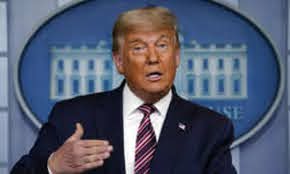
The General Services Administration has informed the Biden transition team on Monday evening that the Trump administration is ready to begin the transfer of power.
GSA head Emily Murphy wrote in a letter that federal government agencies will now make resources available to the Biden team in preparation for the incoming president’s assumption of office. The GSA is an independent government agency that helps manage and support the federal bureaucracy.
President Trump has refused to publicly concede defeat in the general election, and up to now his administration has refused to work with the Biden transition team. However, the president wrote on Twitter that he had allowed Murphy to approve the transition.
“Our case STRONGLY continues, we will keep up the good fight, and I believe we will prevail!” Trump wrote. “Nevertheless, in the best interest of our Country, I am recommending that Emily and her team do what needs to be done with regard to initial protocols, and have told my team to do the same.”
“I was never directly or indirectly pressured by any Executive Branch official—including those who work at the White House or GSA—with regard to the substance or timing of my decision,” Murphy wrote. “I did, however, receive threats online, by phone, and by mail directed at my safety, my family, my staff, and even my pets in an effort to coerce me into making this determination prematurely.”
Murphy’s decision gives Biden around $7 million in federal resources to aid the transition.
The Biden team announced that they had received Murphy’s notice and would prepare accordingly.
“Today’s decision is a needed step to begin tackling the challenges facing our nation,” the transition team said in a statement. “In the days ahead, transition officials will begin meeting with federal officials to discuss the pandemic response, have a full accounting of our national security, and gain complete understanding of the Trump administration efforts to hollow out government agencies.”
Sun