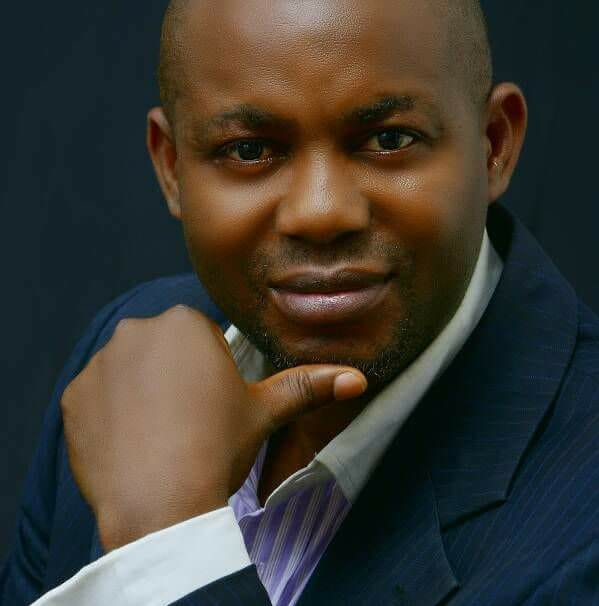
Grassroots based Igbo groups including the Biafran Voice International (BVI), Alaigbo Development Foundation (ADF) and Coalition of Alaigbo Religious and Civil Society Organisations including People Restoration Mission(PRM) will this month organise a one million-man march against open grazing in Igboland.
President of ADF, Prof. Uzodinma Nwala, who disclosed this in a statement, yesterday, indicated that the action was to prevail on Governors of South East and other Igbo speaking states to as a matter of urgency hasten the enactment of anti-open grazing law.
He blamed what people call herders-farmers’ clashes as a major root-cause of the present bloody security situation in Igboland and other parts of the country.
“What is more, criminals from West African and other countries have taken advantage of this situation to invade our communities wrecking all manner of havoc, killing, maiming, and kidnapping our innocent citizens, rapping our wives and daughters with reckless abandon.
“Therefore, the first step in tackling the security challenges is to control the free movement and grazing of cattle. We are not saying that nobody should rear cattle. All we are saying is that open grazing of cattle is bad for our security and is bad for our economy and our survival,” he stated.
According to the ADF President, the Igbo must “assert our collective resolve and call on our Governments to enact the anti-open grazing law as well as put in place all necessary measures to enforce the law.”
The group also faulted the community policing arrangement being worked out by the Inspector General of Police, as according to him, the Fulani-dominated police force cannot guarantee security of Igbo people.
ADF, instead charged the State Houses of Assembly in the region to quickly enact laws backing local security watch or vigilante groups in the communities.
The group urged people in the South East and other areas to immediately follow-suit the courageous and patriotic steps being taken and enforced by their kit-and-kin in the Anioma areas of Delta State to prevent the invasion of their territory by Fulani herdsmen.
“We must say no to the so-called community policing programme being propagated by the Nigerian Police which some Governors are cowardly and for some other reasons are accepting.
“To surrender our security to the Fulani-dominated Nigeria Police is like asking the hawks to police the chickens.
“We in the Alaigbo Development Foundation (ADF) as well as other religious and civil society organizations in Alaigbo call on our people to take their destiny into their hands.
“Security is the joint responsibility of the people and their Government.
Any State Government that fails to take these legal and political measures to ensure the security of our ancestral homes must be declared an enemy of our people,” Nwala stated.
Former presidential candidate in the 2019 general election, Prof. Kingsley Moghalu has urged the federation to revisit 1914 Amalgamation and events of 1966-1970 if she wants to get things right in the country.
Prof. Moghalu made the assertion on Sunday in a statement made available to BVI Channel 1.
He said that Nigeria cannot navigate the future successfully without a reckoning with its past.
“We need to look into the Amalgamation of 1914 and the events of 1966-1970, recognize how these events turned Nigeria into a progressively failing Union, and take steps to reposition for success,” he said.
Explaining why it is pertinent that the issues of Amalgamation be revisited, cited the American example involving the recently murdered George Floyd.
“This is part of the pursuit of “a more perfect union”. It can be controversial. It can be painful. But it’s necessary,” he noted.
MEN SHOULD KNOW THEY MUST STRIVE TO KEEP NAMES ALIVE, IT IS NOT THEIR SONS OR DAUGHTERS THAT WILL DO THAT ….
It is not the property in almost everywhere in the world. It is not the billions of dollars in bank account that will make you popular. It is not the media or journalist in your payroll,they are momentary ! It is the lives you touched without expecting anything back ! It is about adding value to humanity! You will be remembered for solving human problem !
Spartacus died in 71 BC.
Today millions of people know him.
We all know him. Our children also know him.
In 500 years, people will still read about him, about Socrates, about Plato, about Winston Churchill, about Emeka Odumegwu Ojukwu, William Shakespeare. Their stories will almost live for ever.
But, do you know any of their sons or daughters?
bet you don’t.
Their sons are not the ones keeping their names alive. Socrates kept his name alive by the way he lived.
Indeed sons and daughters don’t keep names alive. The life we live will determine if our names should be included in history or not.
*Many people are still busy running around looking for male children that will keep their names alive, I just want to say they are in another planet altogether.*
The reason we talk today about Ajayi Crowther, Nnamdi Azikiwe, Ahmadu Bello, Tafawa Balewa, Nwafor Orizu, Obafemi Awolowo, Michael Okpara, Akanu Ibiam, Moshood Abiola, Albert Obiefuna, Michael Iwene Tansi and millions of others is not because of their male children. It is about what they did when they lived!! Do not contest this. It is a simple fact!!
Can anyone show me the son of William Shakespeare that is keeping his name alive. Today we still have the pen in our hands to write our own story in doing good for humanity. How we do it will determine how we would be remembered!!
Ndubuisi
SEN. AKPABIO’S PERSONAL LETTER TO THE SPEAKER EXONERATES THE 9TH HOUSE BUT FAILS TO MEET THE ULTIMATUM, THE MINISTER IS INVITED TO PUBLISH THE LIST AS INSTRUCTED
Following a motion unanimously adopted by the House, an investigation was ordered into the activities and financial malfeasance of the Niger Delta Development Commission (NDDC) and its Interim Management Committee (IMC) between the periods of January to May 2020.
In a coordinated and calculated attempt to distract Nigerians from the on-going investigation, the Minister of NDDC and the leadership of the IMC raised spurious allegations against members of the National Assembly. The Minister claimed under oath that 60% of all the NDDC projects under investigation were awarded to members of the House between the months of January and May 2020.
Following this disturbing allegation, the leadership of the 9th House issued a 48-hour ultimatum to the Minister to publish a list of the legislators allegedly awarded 60% of the entire projects of NDDC between January and May 2020. Instead of publishing the list for the world to see in the interest of transparency, the Minister in his usual diversionary tactics, chose to send an irrelevant 8-paragraph private letter to the Speaker regarding projects of 2018 which pre-date the 9th House of Representatives and had little to do with the bogus claims he made. The House therefore reiterates that the Minister was given an ultimatum to publish names and not to write a personal letter to the Speaker. The Honourable Minister is hereby cautioned to desist from spinning tales and is invited to go public as instructed.
Nevertheless, it will interest Nigerians to know that paragraph 3 of the Minister’s letter fully exonerated the 9th Assembly. Also, in paragraph 7, the Minister completely withdrew his previous statement about 60% of the NDDC projects being awarded to members of the 9th Assembly.
It is also instructive for Nigerians to note that the total number of projects in the 2019 NDDC budget was 5959 out of which 5416 projects were rolled over from 2018, which the 9th Assembly obviously had no influence or control over. Therefore, unable to prove his claims, the Minister presented an ineffectual spreadsheet of only 266 projects out of which about 20 projects were attracted by past members of the National Assembly as constituency projects, not as contractors, but in furtherance of their representative mandate.
The projects presented in the Minister’s letter are not within the scope of the investigation and do nothing to address the leadership’s ultimatum for him to publish the list of names of the members who he claimed took 60% of NDDC projects from January to May 2020.
Also, contrary to the mischievous narrative being peddled on the internet, the only mention of the Chairman of the NDDC Committee of the 9th House of Representatives, Rep. Tunji Ojo in that letter, was as to his alleged request for the complete payment of 19 contractors who had approached him with complaints over NDDC’s non-payment for their services. This is however, an allegation which has been completely refuted by Rep. Ojo and for which there is no evidence linking him.
The one member of the House mentioned in that letter only attracted the project to his federal constituency, in the same manner that the NDDC MD, EDFA, EDP, Chairman etc applied to the Commission for attention to the needs of their people and were obliged. This attraction of projects does not in any way mean that contracts were personally awarded to them.
Additionally, the letter also listed the names of contract awardees with no evidence linking them to those who attracted the projects to the beneficiary communities. It takes lifting the corporate veil for the directors to be seen and the Corporate Affairs Commission is there to establish who the real owners of the companies are. Until then, it is wrong to attempt to establish a nexus which currently does not exist. The document remains a mere spreadsheet of people who attracted projects to their communities in furtherance of their representative functions.
Furthermore, the directive to press charges against the Minister has not been lifted by the House as the leadership is busy considering the weight of the Honourable Minister’s letter. If it does not clear the doubt and wrong perception, it will be sent to the court for clearance as the Speaker stated.
Once again, the letter’s annexures showing 2018 projects have no relevance to what was requested from the Minister because it was outside the scope of his claims, it was also not comprehensive but selective by mentioning only one current member for attracting projects to his constituency and not for receiving contracts. The House is mindful of a letter currently before it where the Minister also applied to attract several projects to his Senatorial Zone during his time at the Senate, does it mean the contracts were awarded to him?
Nigerians are encouraged to ignore the deflections of the Honourable Minister and continue to ask the right questions as to what happened to the money of the region which has led to a gross disservice to Niger-Deltans. Nigerians should start asking the right questions and demanding the right answers; and the right question remains, “What happened to Nigeria’s ₦81.5billion under the charge of NDDC in the space of 6 months?”
Signed
Rep. Benjamin O. Kalu
Official Spokesperson
Let me thank Pastor Adebayo Oseni for the invitation to participate in this important conversation. This is a huge topic which requires volumes. We focus narrowly on Nigeria’s public sector leadership and attempt to provoke debate with just a few random remarks.
Values constitute the enduring beliefs or principles that guide our judgments as to what is important in life (including integrity, honesty, justice, compassion, responsibility, freedom, liberty, hard work, etc). Ethics on the other hand, are those gamut of moral, religious, social, and cultural ethos of what’s right and wrong. Our ethics guide us as to what is good or evil, rights and obligations, just and unjust, fairness, etc. Positive ethical values therefore constitute the core of the non-tangible driving force of transformative change in every society. A society without sound ethical values is one without a soul, and which will continue to grope without a compass to anywhere.
Leadership itself is the art of inspiring and mobilizing people to accomplish defined goals. It is both a product and driver of society. A transformative leader leads by personal example: (do what I say and what I do) and usually exhibits such qualities as: integrity, accountability, empathy, humility, resilience, vision, and influence. It therefore follows that an effective and transformational leader must have clear guiding morals, ethics and values derived from the society or which he must offer the society.
In broad terms, we are all leaders and followers in our own rights. The differences pertain to job descriptions, place, and time. One is a leader in one context and a follower in another: the leader in a family becomes a follower in his place of work; the leader in the place of work is a follower in the place of worship; the leader in the place of worship is a follower in the village union or local council; the leader in the council is a follower in the state; the governor of the state is a follower relative to his president; the president is leader of Nigeria but a follower in his mosque. We are all leaders and followers at the same time. Leadership failure is therefore a systemic failure—not just the failure of tiny 0.01% of our population holding public offices.
It is in the light of the above that I commend this Webinar— the topic of which should elicit a structured national conversation. Our premise is that there is a systemic collapse of ethical values and almost all citizens are accomplices through acts of omission or commission. The challenge as we see it is how to evolve a society founded on operational sound ethical values as well as ethical leaders rooted in transformative values, in a society where the dominant value is the worship of money (however acquired), where ethical standards have become shifting posts, and where corruption has become part of the culture. As a point of departure from most commentaries, our thesis is that we are all leaders and followers at the same time, and the change we desire must come from all of us. We all have a collective responsibility to create and sustain a society and leadership of ethical values and vision. For a change, we should try a double-barrelled approach— a dominantly bottom-up demand for change and a top down action plan.
II: Explaining paradoxes of perverse ethical values
In the 60 years of Nigeria’s independence, there is an apparent inverse relationship between the quantum of professed personal and group ethics/values and deterioration in public morality, ethics and values. Most Nigerians are either Christians or Moslems and all supposedly subscribe to the ethics and values embodied in their religious books—the Holy Bible, and the Koran. Most virtues of a good person and ethical leadership are espoused by both. So, why is the opposite largely the case? Check out the lyrics of our National Anthem and Pledge; the various oaths of office and allegiance; the various programmes of national orientation, the manifestoes of political parties and candidates before elections, the Constitution (especially Chapter 2 on the Directive Principles of state policy), the myriad of legislations bordering on transparency, probity and anti-corruption, etc. Yet, Nigeria continues to slide on the fragile (failed) states index (now under the red-alert category); ranks poorly on corruption, as well as most socio-economic indices despite earning hundreds of billions of US dollars from oil, etc.
So, why is this extreme variance between professed ethics and values and reality? There are many explanations, and the most popular is poor leadership. People blame poor leadership but without a concrete proposal as to how the desired leadership can emerge and endure. Or, why any previous episode(s) of ‘good leadership’ did not endure (if there has been any). Leadership is certainly a part (only a part) of the story. We offer three others.
The first is that as a multi-ethnic, multi religious country, Nigeria is still in search of unifying common purpose and destiny. The citizenship question is lingering, and public morality and national vision are seen from too many, albeit conflicting prisms. The second is the natural resource rents (mostly oil rents) that seem to be the thread holding together the fractured elite as well as papering over the fault-lines. Previously, we have written copiously on this point and won’t elaborate more. In summary, the fiscal federalism created to share/consume the oil rents together with its perverse incentives which create a culture of indolence and entitlement is antithetical to the tenets of accountable and ethical leadership. There are indeed very few diverse societies such as ours that suddenly stumbled on huge natural resource rents (without strong institutions) that the lottery effect of such rents did not wreak havoc on their institutions and governance. In a rentier culture, raw wealth divorced from work/effort is the new god. People worship it, and most talents and institutions are devoted to chase the “manna from heaven” without any moral compunction. After all, they would say, “it is government money, and not your money”.
The third explanation is the stage whereby the sharing and scramble for rents are socialized or ‘democratized’ to the extent that the citizenry is numbed to any moral reprehension to unearned wealth. The sharing and distribution of rents (either from oil money or criminality such as drugs, internet fraud, or treasury looting) have produced a horde of millionaires and billionaires with no known daytime jobs. A new value system is enveloping some youths: “get rich young or die trying”. Not surprisingly, thousands of our youths are languishing in prisons abroad—trying to get rich by whatever means possible. The public has become numbed and largely acquiesce to, and normalized it to the point of celebrating such. An Igbo proverb says that once a hitherto abomination is tolerated for a year, it becomes part of the culture. You are seen as kind and generous if you acquire illicit wealth and sprinkle some in a display of opportunistic charity (marked by photo ops). Most don’t care how you get the money. All is fair provided that it gets money. The only crime in such a society is poverty.
The culture adores the man who “has money”—- not necessarily the one who “makes money”. Citizens applaud, defend, and celebrate primitive accumulation. Hypocrisy and multiple moral compasses compete for space: many publicly preach integrity and transformative change but privately demand and crave for their share of the bazaar. Politics is considered an occupation by many rather than a vocation. Many people see public office as “lucky” avenues for private enrichment and not necessarily for service. Transactional rather than transformational leadership is the norm. Citizens evaluate the importance of public office held by “one of their own” by the size of its procurement (“juicy” vs “dry” ministries and agencies). Many public officials merely play hide and seek games with law enforcement agencies, while the citizens rejoice or mourn depending on who is prosecuted. If he/she is from his church or ethnic group, then it is ‘political persecution’ but corruption if not.
In such an environment, prosperity and wealth accumulation are largely explained by “luck” rather than enterprise. And some of our religious leaders tend to complicate matters: prosperity preachers promote testimonies about how people “got money” that has nothing to do with enterprise or value creation (hard work). A friend of mine was once wondering whether we still preach personal responsibility and hard work as embodied in 2 Thessalonians Chapter 3, especially verse 10 that says: “the one who is unwilling to work shall not eat”. Many clergy have substituted prayer/luck for hard work. While we preach against bribery and corruption, those that loot and donate to the house of God receive blessings.
A theory of corruption opines that in a society where corruption is endemic and part of the culture, there is no incentive or reward for honesty. “So, what is he trying to prove?” is usually the response to anyone trying to be different, and the price can be stiff including social ostracism. A principle-centred leadership that wishes to uproot the existing social order must be prepared to pay the price. This is especially in a democracy where a majority of the voters (with totally different ethical values rooted in rent extraction and ‘stomach infrastructure’) will decide the leader’s fate. With politicians having short term time horizons and eyes on the next election, the challenge is immense. It is said that an “ethical leader is not afraid to do what he believes to be right—even if it is unpopular, unprofitable and inconvenient”. Well, there are now sufficient case studies at both the federal and state levels in Nigeria to test the efficacy of such leadership disposition. Some of us who have tried with some successes in fighting an existing social order have nasty experiences— including for me, 19 written threats to life, etc.
Let me share three of the many examples that illustrate the collapse of ethical values and normalization of such by society. An elder statesman once told me that after public office, even if Jesus Christ were to come down and announce to all Nigerians that one was free of corruption, Nigerians would be disappointed in Jesus. According to him, they would think that Jesus collected bribe from the former public officer to lie on his behalf. He was trying to pass the message that it would be fruitless trying to convince anyone of your integrity once you have stepped into public office.
At a public lecture in one of the federal universities, I once asked the audience (99% composed of lecturers) what society would think of a former state governor who, after 8 years in office, returns to his former three bedroom flat in a high density neighbourhood with his old Peugeot 504. The response was one that I won’t forget in a haste. Everyone in the auditorium shouted that the ex-governor must either be ‘mad’, ‘an idiot’, ‘foolish’, ‘crazy’, ‘a pretender’, etc. As that part of the lecture was interactive, I enquired whether anyone would consider that he must have been honest or saintly and some thundered: ‘for where?’ with greater laughter in derision. I summed up by informing them that what we did was a “focused group sampling”, with a selection of the category that constitutes the top 0.1% of our educated elite. If such an elite group held such a view, didn’t it stand to reason that they were in effect saying that if they found themselves in public office, they would loot or that they were demanding corruption from public officers since no one would want to be thought of as being ‘mad’, ‘an idiot’ etc. It was at this point that they got the thrust of my thesis, and applauded.
A friend of mine narrated his experience at mobilizing the people to resist unjust treatment at a petrol station that was selling at far higher pump price. After filling his tank, he paid the appropriate official price (and expected the people to join in the protest). The crowd in the queue descended upon him—reigning insults at him. Some told him that if he did not have money to pay for petrol he shouldn’t waste their time; others told him to sell his nice suit to pay for fuel, etc. So much for the people’s power or ‘standing up for the masses’. Evil by the minority, they say, can only persist if the majority decides to do nothing. Yes, we want change but no one is prepared to lift a finger for it. No society has developed that way.
III: Next Steps: Towards transformative society and leadership
Nigeria requires a new social order—- a society rooted in ethical values and visionary leadership that embodies and manifests current and aspirational values of society. Effective leadership or appropriate political will do not fall from the sky. They are products of society. A leader may try to impose his narrow pristine values on society but such a social revolution must be socialized and acculturated in society otherwise such attempts have often ended as temporary footnotes.
In a democracy, political parties are supposed to aggregate and promote alternative aspirational values of society. Unfortunately in Nigeria, political parties are not ideologically driven. Despite all the noise and so called manifestoes, parties are mere platforms to grab power, with factions of the same ‘Elite Incorporated’ constantly grouping and regrouping to acquire power and superintend over the distribution of rents. Truth be told, there are not many examples of the visionary leadership several commentators romanticise about (especially from China, the East Asian countries or Dubai) which have multiparty democracies and term limits of four or eight years. Many examples often cited have one party/leader in power for extended period (some decades), and hence able to think and act long-term. If politicians have very short term horizons and you have weak civil/public service and complacent citizenry/civil society, visionary leadership becomes an occasional aberration that comes by fluke.
A sustainable new social order and leadership won’t be handed over to us by the mythical leader from the skies. In democracies such as ours, the evolution of society and leadership is a function of constant struggles by an ever vigilant civil society/citizenry as well as constant refinements of the institutions/legal frameworks that underpin society. We need actions at three levels: individual (family/household); organizations/civil society; and legal/legislative actions.
The individual as the unit of change. The change we desire is within us. This is often the most neglected focal point of action. The society is aggregation of individuals and if we think and act in socially conscious manner as well as self-belief, we can achieve anything. As Shakespeare said, ‘the problem is not in our stars but in ourselves’. We need to rediscover the power in the self. If we can’t change all, start with yourself. Some say: “the change starts with me” or “be the change you want to see”. Let’s go back to the roots— the family. How many times do we hold that family session on values of integrity and service to others?
It all starts with purpose: Depends on what we see as our purpose or mission in life– material versus spiritual interpretation of our purpose. If one sees his mission as being to contribute to God’s creation by leaving the world better than he met it, life has a totally different meaning from the vain primitive accumulation. In this context, life of selfless service driven by ethical values acquires concrete meaning. I strongly recommend the books by Rick Warren especially “The Purpose Driven Life” and “What On Earth Am I Here For?” We must return to the traditional family values, and teach our children that integrity requires that one can be hungry and yet refuse food. In the end, no one can give what he does not have. Individuals without ethical values cannot offer them to society.
Let each one do his/her part. How do we as individuals contribute for a better society— at the traffic point; paying my bills; place of work; family; relation to others; community service; neighbourhood; voluntary works; collecting money to sell our votes during elections, demanding for bribes or for unearned gratification at all levels, etc. We don’t all have to be president to ‘lead’.
It is also very important that each individual takes more than a passing interest in politics and governance. Not everyone should be partisan or contest elections but no one can afford indifference. As Bill Maher said “Freedom isn’t free. It shouldn’t be a bragging point that ‘Oh, I don’t get involved in politics’, as if that makes you somehow cleaner. No, that makes you derelict of duty in a republic. Liars and panderers in government would have a much harder time of it if so many people didn’t insist on their right to remain ignorant and blindly agreeable”. In a society such as ours, indifference in my view, is a sin.
Organization is power
As the saying goes, “if you want to go fast go alone, but if you want to go far, go together”. With the vacuum created by ideologically-hollow political parties, civil society organizations and in particular the religious organizations— must assume more than usual roles as creators and custodians of social values in governance. Like Caesar’s wife, they must be above board and live out the true essence of the change they preach. Most Nigerian leaders profess either Christianity or Islam, and so are ‘followers’ of one priest or Imam. If the religious leaders are seen to be co-opted into the rentier circus, then the road to a new social order will be long and tortuous.
The importance of organization and citizens’ resistance for a new social order cannot be over emphasised. There are hundreds of laws in the books of most countries for ethical values. Whether and how they are implemented depend on the activism of the citizens. The American Constitution professed that “all men were created equal”, and yet they fought a civil war to end slavery; a resistance started by one woman (Rosa Parks) in December 1955 and civil rights protests led by Reverend Martin Luther King for over one year before the segregation was declared unconstitutional; and even after more than 60 years and in spite of all the laws on equality in America, the Black Lives Matter movement is alive. Following recent protests, many states and cities in America have reviewed or are reviewing their criminal justice system. It is instructive that many of the protests in the US history are galvanised by religious leaders/ organizations. For a new social order, Nigeria probably needs more than 50 Martin Luther King or Gani Fawehinmi.
Without organized citizens’ demand for good governance, status quo becomes bliss. A frontline (forthright) politician was once publicly asked why corruption persists in Nigeria and characteristically, he shot back: “because you people don’t stone us”. Deep statement to ponder! If the response of the citizens is to line up and pick the crumbs from the looting machines or to wait for their turn rather than protest, how do we expect change? Unfortunately in Nigeria, many civil society, labour, and religious groups speak out or protest only when their particular interests are threatened. This needs to change.
As stated earlier, the church and religious organizations have unique and decisive roles to play. For starters, the prosperity gospel that promises unearned cash or wealth (“something for nothing”) based upon luck/miracles as if God serves people breakfast on bed has proved to be part of the problem. No society has advanced based on these values and certainly in the emerging digital age of the 4th Industrial revolution, that may prove misleading to our youths. Our youths cannot lead the future with such values. We may consider preaching/teaching more productive ethical values based upon personal responsibility and diligent, smart hard work (as embodied in the Bible especially 2 Thessalonians Chapter 3). Finally, can the Church of God and other religious organizations lead the new moral and ethical renaissance by articulating, publicising and enforcing their own concrete code of conduct/sanctions for their members in public office? This may be difficult but it would be a true revolution and leadership by example.
The legal framework of every country is a living document which continues to evolve. Most reasonable analyses of the 1999 Constitution of Nigeria have concluded on the imperative of fundamental changes especially in relation to the fiscal federalism, electoral and judicial systems, etc. We need to break the perverse incentives in the Constitution and laws that perpetuate the status quo. These changes will significantly affect the leadership selection process and incentivise the search for productive leaders.
It would be a historic waste if the 8th National Assembly fails to give Nigeria a new Constitution for prosperity— or, at the minimum advance the process significantly!
Let the conversation continue!
Thank you!
The Members of the All Soludo Support Group Birthday Committee have announced that there will be no celebration for Soludo as he turns sixty on twenty-eighth July 2020.
The chairman of the committee, Chief Jude Emecheta, who unveiled this during a press briefing in Awka, said that the celebrant, Professor Charles Soludo, wishes that his friends, associates, and all support groups channel such resources to the poor, the down trodden and less privileged persons in the society.
Chief Emecheta noted that the celebrant appreciated the efforts ofextended family members, friends, colleagues, associates, organizations and support groups have been making to participate in sharing with him and his family the joy of attaining this landmark
age.
The Secretary of the Committee, Dr Nelson Omenugha listed the Committee’s activities for the commemoration to include, thanksgiving at various churches, endowment of one million naira price money to the best graduating students in Economics Department at Chukwuemeka Odumegwu Ojukwu University and Nnamdi Azikiwe University.
Dr. Omenugha further explained that the endowment, which will last for a period of five years, will see each best graduating student in both schools go home with one hundred thousand naira only.
He noted that the Committee will on Tuesday twenty-eight July 2020 make another endowment to the tune of two million naira to the Anambra State Health Insurance Agency for the enrollment of one hundred and sixty-six selected inmates of motherless babies’ homes and physically challenged persons.
Dr Omenugha noted that gesture tends to capture, the education and health sectors, which according to him are the key areas Soludo is very passionate about.